More PRs, slower merges: when acceptance becomes the bottleneck
AI agents raise pull request volume while merge time climbs. Why evenly confident diffs stretch review thin, and why acceptance is the scarce resource now.

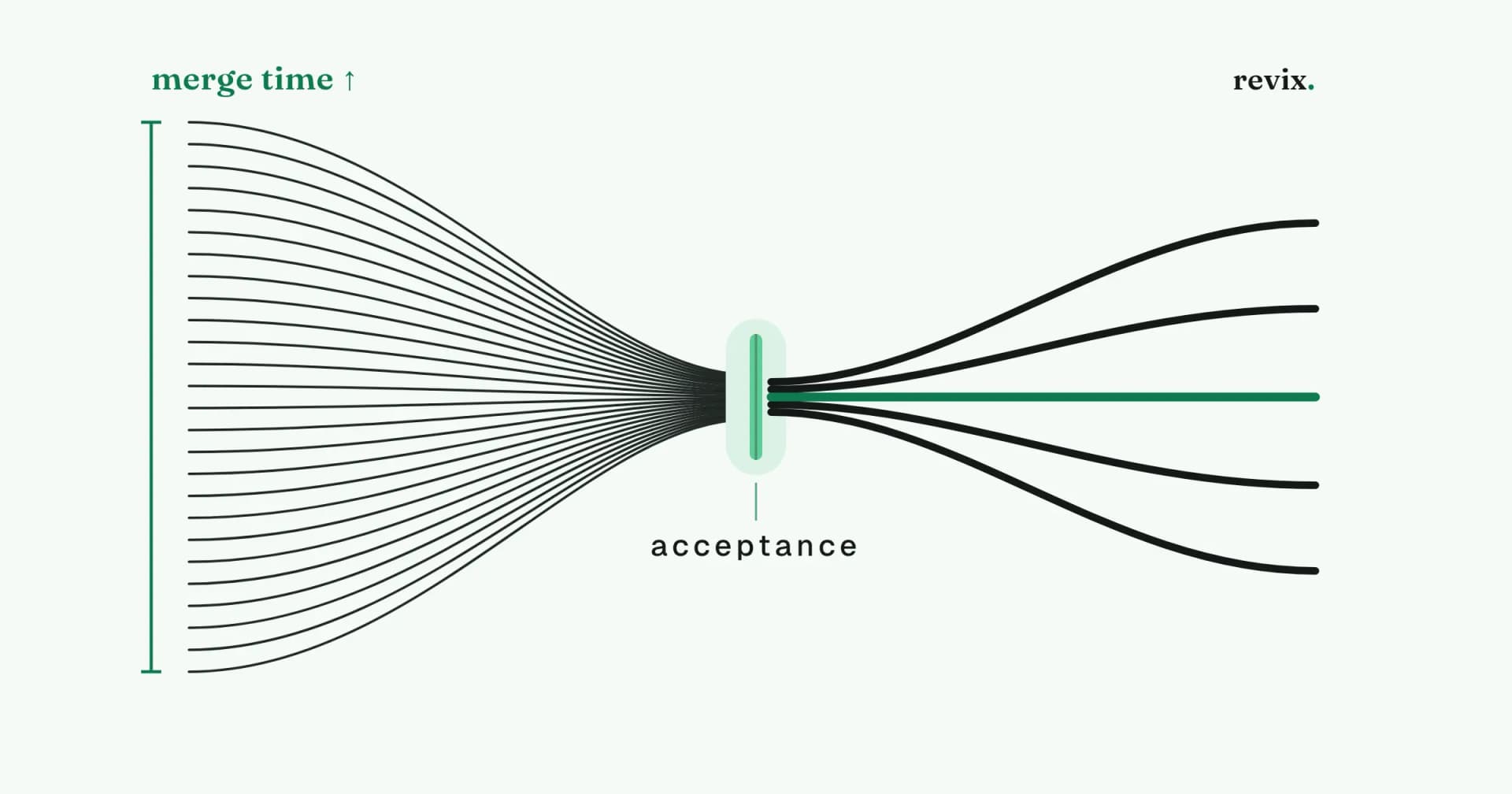
Coding agents make it cheap to open more pull requests. Merge time does not always follow.
One team tracked the shift after agents hit their workflow. Pull requests went from roughly 31 a week to about 68. Median time to merge went from around 4 hours to around 14.
People did not get worse at reviewing. The shape of the work changed.
Why review gets thinner when volume rises
Human drafts usually leave clues. Rough edges, TODOs, uneven confidence. Reviewers use those cues to decide where to look first.
AI diffs often look evenly confident. Every hunk reads finished. There is less signal about where the author was unsure. Attention spreads thin across a longer queue, and the queue still grows.
That is how you get more PRs and slower merges at the same time. The bottleneck moved.
Why another generic AI reviewer often fails here
When the queue hurts, the obvious move is to add automated comments. Sometimes that helps. Often it adds a second stream of plausible text.
More comments. Same bottleneck.
If the comments do not match what a senior on that team would leave, authors spend time sorting noise instead of getting a clearer path to merge. Review load goes up. Acceptance does not get easier.
We have written before about comments that actually help authors act: how to write a great PR review comment. The same bar applies whether a human or a tool leaves the note.
Acceptance is the scarce resource
Authorship is no longer the hard part for many teams. Agents raised how much code shows up for review. What is AI code review sits in that same loop: tools that write faster still need a standard for what is allowed to land.
Acceptance is the judgment that a change meets the standards already in the repo. The scarce resource is that judgment, applied early enough that the author can still respond while the change is fresh. Most pull requests are already fixed before a human opens them when feedback arrives in that window.
What helps is review that matches what a senior on that team would leave. Useful comments against repo standards. Less noise.
That is the gap Revix is built for. It reviews every pull request against standards derived from your repository, so acceptance gets faster for the right reasons.
What to watch on your own chart
If your team started using agents, look at three simple series over the same weeks:
| Signal | What it tells you |
|---|---|
| PRs opened per week | Whether authorship volume actually rose |
| Median time to merge | Whether the queue absorbed that volume |
| Comments per PR (human + bot) | Whether extra review text is helping acceptance or just growing |
A rising PR count with a rising merge-time median is the pattern above. More bot comments with no movement in merge time is a hint that review text is not the missing piece.
What does your merge-time chart look like since your team started using agents?
If you want to see senior-standard review on your next pull request, connect a repository at revix.ai. Every team starts with a 14 day free trial, no card required.
Frequently asked questions
Keep reading
- Most Pull Requests Are Already Fixed Before a Human Opens ThemIn July we reviewed 322 pull requests. Developers fixed 96% of the issues they engaged with, usually within minutes of opening the PR. By the time a reviewer looked, there was nothing left to catch.
- How to Write a Great PR Review CommentMost PR comments waste the author's time because they never say what they actually want. Here is the four-part format that fixes that.